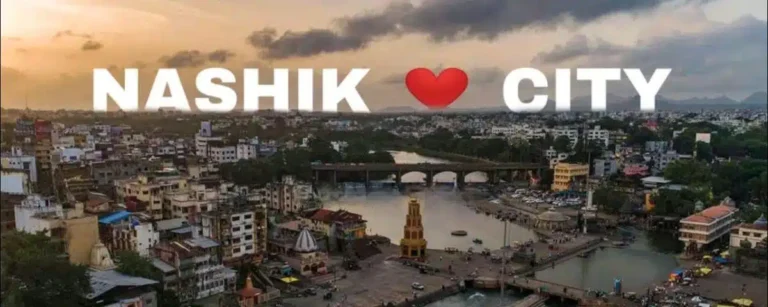
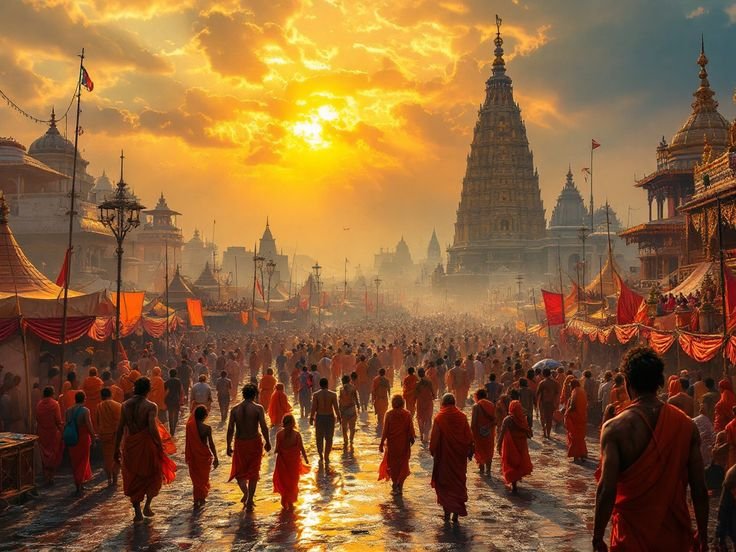
1. Nashik Kumbh Mela 2027: A Historic Spiritual Gathering
The Nashik Kumbh Mela 2027 is one of the most significant and eagerly awaited religious festivals in India, celebrated once every 12 years with immense grandeur and devotion. This sacred event takes place in the holy city of Nashik, along with Trimbakeshwar, both of which hold deep spiritual importance in Hindu mythology and culture. Drawing millions of pilgrims, saints (sadhus), and spiritual seekers from across India and the world, the Nashik Kumbh Mela transforms the region into a vibrant hub of religious fervor and cultural celebration.
Known as one of the largest peaceful gatherings on earth, the Nashik Kumbh Mela is a unique opportunity for devotees to participate in ritualistic holy dips in the Godavari River, believed to cleanse sins and purify the soul. The festival spans several weeks and features elaborate ceremonies, religious discourses, processions, and cultural performances, showcasing the rich heritage of Nashik and its surrounding regions.
The spiritual energy of the Nashik Kumbh Mela is unmatched, as it brings together different sects of Hinduism, including the famous Naga sadhus who lead the procession during the Shahi Snan (Royal Bath). Alongside its religious significance, the event also serves as a melting pot of diverse cultures, attracting tourists, historians, and researchers fascinated by this ancient tradition.
2. Incredible Technological Innovations in Nashik for the Kumbh
The Nashik Kumbh Mela 2027 is not just a grand spiritual gathering; it is also poised to become a landmark event in the use of cutting-edge technology to manage and enhance the experience of millions of visitors. For the very first time in its history, the organizers are incorporating state-of-the-art innovations such as AI-based crowd management systems, satellite mapping, smart sanitation solutions, and digital information kiosks, revolutionizing how the festival is conducted and experienced.
Managing the massive influx of pilgrims expected to number in the tens of millions—is a tremendous logistical challenge. To address this, the Nashik Kumbh Mela authorities are deploying advanced artificial intelligence tools designed to analyze crowd movement patterns in real-time. These AI-powered systems can predict potential congestion points and automatically redirect the flow of people, significantly improving safety and reducing the risk of accidents in crowded areas.
Satellite mapping technology is another game-changer for the Nashik Kumbh Mela 2027. Using high-resolution satellite images, planners can monitor the entire festival area, track changes on the ground, and swiftly respond to emergencies or infrastructure needs. This technology provides an aerial perspective that ensures efficient coordination between security forces, medical teams, and volunteer organizations, enhancing overall crowd control and resource management.
3. 3 Major Challenges Facing Nashik During the Kumbh Mela
While the Nashik Kumbh Mela 2027 promises a magnificent spiritual and cultural experience, the scale of the event also presents several significant challenges for the city and its administration. Managing millions of pilgrims over a limited geographical area is a complex task that requires meticulous planning and swift action. Among the most critical challenges facing Nashik during the Kumbh Mela are crowd safety, water management, and waste disposal.
Crowd Safety:
Ensuring the safety of the vast number of attendees is perhaps the most pressing concern for the Nashik Kumbh Mela organizers. The sheer volume of people gathered in close quarters creates risks of stampedes, accidents, and health emergencies. Controlling crowd movement, preventing overcrowding at key ritual sites, and maintaining order require robust security measures and real-time monitoring. Authorities are investing in advanced surveillance systems, increasing police presence, and training volunteers in crowd management techniques to mitigate these risks. However, the unpredictability of human behavior during such massive gatherings means that safety remains a continuous challenge.
Water Management:
Water is both a sacred element and a vital resource at the Nashik Kumbh Mela. Pilgrims perform ritualistic baths in the Godavari River, believing it to cleanse their sins and purify their souls. However, the festival’s scale puts tremendous pressure on local water resources. Ensuring clean and sufficient water supply for millions of people both for drinking and ritual purposes requires sophisticated infrastructure and management. Authorities face the difficult task of balancing spiritual needs with public health concerns, preventing water contamination, and providing adequate sanitation facilities along the riverbanks.
Waste Disposal:
The environmental impact of the Nashik Kumbh Mela is another major challenge. With millions visiting, the generation of waste—from food wrappers, plastic bottles, and other disposables—skyrockets. Proper collection, segregation, and disposal of waste are essential to keep the festival grounds clean and minimize pollution, especially to protect the holy Godavari River. The local administration is deploying large teams dedicated to waste management, setting up recycling points, and promoting awareness among pilgrims to reduce littering. Still, the volume and diversity of waste make this a formidable challenge that requires constant vigilance and public cooperation.
4. Economic Boom for Nashik: Hotels, Transport & Tourism
The Nashik Kumbh Mela 2027 is much more than a spiritual pilgrimage; it is a powerful economic engine that transforms the entire region into a bustling center of commerce, employment, and investment. While its religious significance attracts global attention, the festival also creates a massive ripple effect across multiple sectors of Nashik’s economy, from hospitality and transport to retail, tourism, and local crafts.
Hospitality Sector:
As millions of pilgrims, tourists, and dignitaries descend on the city for the Nashik Kumbh Mela, the demand for accommodations skyrockets. Hotels, guesthouses, dharamshalas, and even temporary tent cities witness full occupancy, often months in advance. This surge in demand fuels investments in hotel renovations, new property development, and improved guest services. Local homeowners also take advantage of the opportunity by offering rooms on homestay platforms, creating additional income streams. Restaurants, cafes, and roadside eateries experience a dramatic increase in footfall, with many introducing special menus and services tailored to Kumbh visitors.
Transportation and Mobility:
The Nashik Kumbh Mela 2027 triggers a dramatic spike in local and intercity transportation needs. Railways, buses, taxis, and auto-rickshaws operate at maximum capacity, often with increased frequencies and expanded routes. Ride-sharing services and tour operators also step in to offer flexible travel options for both pilgrims and tourists. This not only generates substantial revenue for transport operators but also leads to temporary and permanent job creation for drivers, mechanics, logistics coordinators, and more. Infrastructure upgrades—such as improved roads, signage, and traffic systems leave a lasting benefit for Nashik’s transport ecosystem.

Tourism and Local Economy:
Beyond spiritual tourism, the Nashik Kumbh Mela opens the door for a broader discovery of Nashik’s attractions. Tourists often explore local landmarks such as the Trimbakeshwar Temple, Saptashrungi, Pandav Leni caves, and Nashik’s renowned vineyards and wineries. Travel agents and tour guides enjoy booming business as they offer curated cultural and historical experiences. In parallel, local artisans, street vendors, and small businesses thrive by selling religious souvenirs, traditional garments, local handicrafts, and regional delicacies to the swelling crowd. This inflow of income supports the livelihoods of thousands of Nashik’s residents, especially in semi-urban and rural areas.
Real Estate and Investment:
The economic activity surrounding the Nashik Kumbh Mela also has a notable impact on real estate in the region. The demand for short-term rentals, commercial spaces, and new developments rises, attracting interest from investors and developers. Infrastructure improvements made in anticipation of the Nashik Kumbh Mela such as better connectivity, sanitation facilities, and digital servicesfurther enhance Nashik Kumbh Mela long-term appeal as a real estate hotspot.
5. The Spiritual Importance of the Trimbakeshwar Shahi Snan
At the sacred core of the Nashik Kumbh Mela 2027 lies one of the most revered and spiritually charged rituals in Hinduism the Shahi Snan (Royal Bath) at Trimbakeshwar. Held on the banks of the holy Godavari River, this ceremonial dip is far more than a symbolic act. It is believed to hold immense power to cleanse the body, purify the soul, and liberate one from the cycle of birth and rebirth (moksha). For millions of devotees, this act of immersion during the Nashik Kumbh Mela is the spiritual pinnacle of their lives.
The Trimbakeshwar Shahi Snan is not merely a ritual; it is a deeply transformative experience. According to ancient Hindu scriptures and astrology, the Kumbh Mela is held when the planets align in specific positions, making the waters of the Godavari spiritually charged during that period. Bathing in the river at this divinely ordained time is believed to amplify the benefits manifold. Pilgrims from every corner of India — and increasingly from around the world — journey to Trimbakeshwar with unwavering devotion to take part in this sacred event.
6. How Nashik is Preparing for the 2027 Maha Event
As the countdown to the Nashik Kumbh Mela 2027 begins, the city of Nashik is undergoing a remarkable transformation to accommodate what is expected to be one of the largest gatherings in the world. With over 1 crore (10 million) visitors projected to attend this spiritually and culturally significant event, the Nashik Municipal Corporation (NMC), in collaboration with the Maharashtra state government and central authorities, has embarked on a massive infrastructure and planning mission to ensure a safe, organized, and spiritually enriching experience for all.
One of the most visible aspects of Nashik’s preparation for the Nashik Kumbh Mela 2027 is the overhaul and expansion of its transportation infrastructure. Key roads leading to pilgrimage sites such as Trimbakeshwar and the Godavari ghats are being widened and resurfaced to ease traffic congestion. New flyovers, bypasses, and public transport routes are under construction to ensure smoother movement within the city. Special attention is being given to pedestrian walkways and access routes to accommodate the lakhs of pilgrims who travel on foot during the Mela.
7. Why the World Is Watching Nashik in 2027
The Nashik Kumbh Mela 2027 is not just drawing pilgrims from across India it is capturing the attention of the entire world. As one of the largest human congregations on Earth, this ancient Hindu festival is emerging as a global case study in managing faith, tradition, technology, and modern civic planning. From UNESCO representatives and international academics to journalists, filmmakers, and spiritual tourists, all eyes are now turning to Nashik to witness how a city balances the mysticism of millennia with the demands of a digital, interconnected world.
The scale alone makes the Nashik Kumbh Mela a subject of global fascination. With over 1 crore (10 million+) expected attendees, including saints, foreign travelers, and spiritual seekers, the event rivals any international gathering from Olympic Games to World Expos — in magnitude and complexity. But what sets the Kumbh Mela in Nashik apart is that this scale is rooted in faith, not entertainment or commerce. It is a spontaneous pilgrimage that transcends planning cycles and bureaucratic control, offering a glimpse into how mass devotion manifests in real-world logistics.
Conclusion: Nashik Is Ready to Make History
The 2027 Nashik-Trimbakeshwar Simhastha Kumbh Mela promises to be a blend of ancient devotion and futuristic organization. While there are undeniable challenges, the event offers incredible potential for Nashik’s cultural, spiritual, and economic rise.
Read More About Nashik Kumbh Mela
Table of Contents