Nashik Real Estate Supply vs Demand: What Buyers Should Know
The real estate landscape in Nashik has witnessed significant changes over the past decade — from rapid infrastructure growth and rising lifestyle amenities to increasing interest from buyers and investors across India. As the city evolves, understanding the Real Estate Supply vs Demand dynamics is crucial for property buyers who want to make informed decisions. Add to that the impact of Nashik event and updates, including major cultural festivals, business developments, and civic initiatives, and you have a real estate story that’s both complex and full of opportunity.
In this blog, we break down the Nashik property market’s current supply and demand trends, explore what’s driving the imbalance, and offer practical insights for buyers — whether you’re looking for a home, rental property, or investment opportunity.
Understanding Supply and Demand in Real Estate
In real estate, supply refers to the total number of properties available in the market — including residential plots, apartments, villas, and commercial spaces. Demand, on the other hand, reflects the number of buyers or tenants looking for property at a given time. When demand outpaces supply, prices tend to rise; when supply exceeds demand, prices may stagnate or soften.
Supply and demand are shaped by various factors such as economic growth, population migration, infrastructure development, local governance policies, and lifestyle trends. Nashik’s real estate market — influenced by a mix of these forces — offers a unique case study.
What’s Driving Demand in Nashik?
1. Rapid Urbanisation and Population Growth
Nashik is one of Maharashtra’s fastest growing cities. As economic activity expands and new job opportunities emerge — particularly in industrial sectors like manufacturing and logistics — more people are relocating here for work and lifestyle reasons.
This rapid urbanisation has boosted the demand for housing — both for purchase and rental — across various income segments. More families are seeking quality residential developments, driving demand in both established and emerging localities.
2. Infrastructure Development and Connectivity
Infrastructure upgrades remain one of the strongest drivers of real estate demand. Nashik’s improved connectivity — particularly through projects like the Samruddhi Mahamarg expressway, better rail links, and airport enhancements — makes commuting easier and increases the city’s appeal for professionals who work in metros but prefer more affordable living options.
As infrastructure continues to expand, more individuals and families are considering Nashik as a long-term home destination rather than a short-term stopover.
3. Event-Driven Demand: Nashik Event and Updates
Major events such as the Simhastha Kumbh Mela, cultural festivals, and business expos have played an important role in boosting visitor footfall and overall visibility for Nashik. Coverage of Nashik event and updates in media and travel circles has helped position the city as a vital cultural and economic hub. Events like these tend to increase short-term accommodation demands and often translate into long-term interest from investors looking to capitalise on rising tourism and hospitality needs.
4. Investment and Rental Appeal
Property investors have their eyes trained on Nashik for multiple reasons. Firstly, property prices remain more affordable compared to major cities like Mumbai and Pune. Secondly, rental demand — driven by students, professionals, and migrant workers — supports strong occupancy levels, particularly in areas close to industrial hubs and transport corridors.
This combination of affordability and rental potential has strengthened overall demand for real estate in Nashik.
Current Supply Trends in Nashik Real Estate
To understand where supply stands in the Nashik market, it’s important to look at both existing inventory and upcoming projects.
1. Existing Property Inventory
Nashik has a diversified inventory spread across categories such as:
- 1 and 2 BHK apartments
- Premium apartments and gated communities
- Villa projects and plotted developments
- Commercial spaces
While traditional areas like Indira Nagar and Nashik Road remain well supplied, newer areas such as Gangapur Road and Pathardi Phata are seeing an influx of newly launched projects catering to modern buyers’ preferences.
2. New Project Launches and Progress
Real estate developers have been active in launching projects that cater to different buyer segments. Affordable housing projects, mid-range apartments, and luxury villas continue to enter the market. Additionally, mixed-use developments that combine residential, commercial, and leisure spaces have been gaining traction.
However, even with these launches, supply in certain desirable zones remains relatively limited. Core residential hubs where demand has surged — especially near major employment and infrastructure nodes — are experiencing inventory absorption faster than new units are delivered.
3. Delays and Supply Bottlenecks
Like many Indian cities, Nashik has faced its share of construction delays caused by regulatory bottlenecks, land acquisition challenges, and rising construction costs. These factors have slowed down the rollout of some projects, tightening the available supply in markets where demand remains high.
Real Estate Supply vs Demand: What the Data Shows
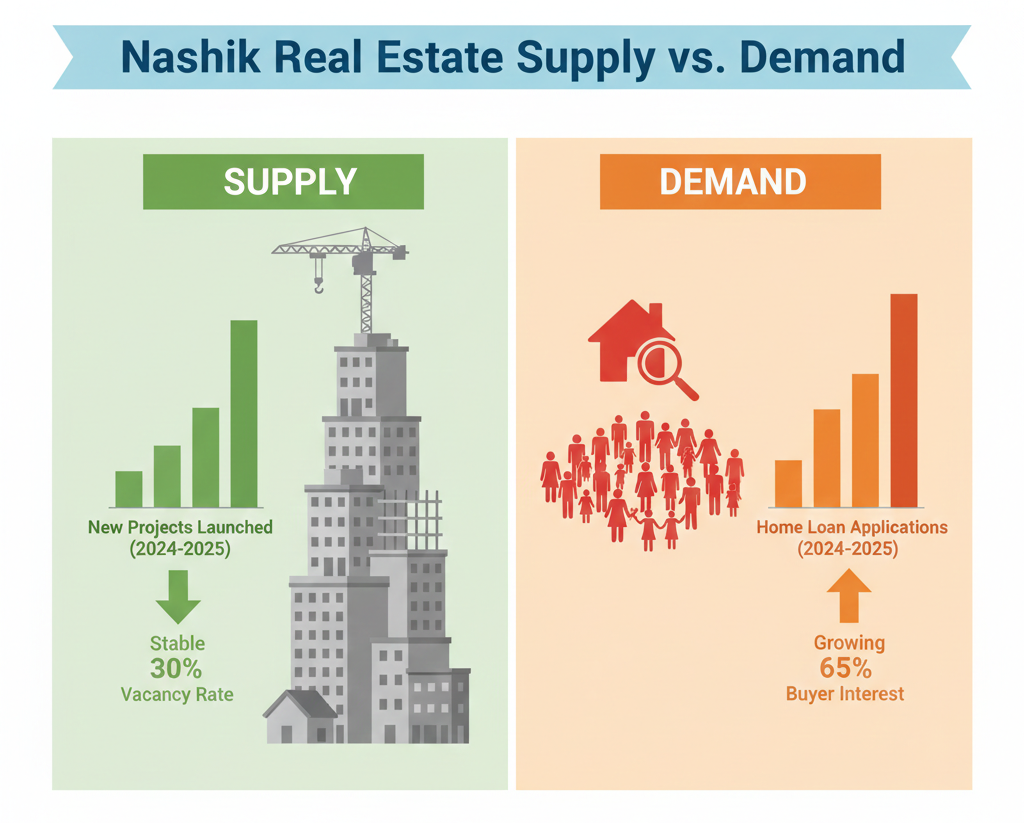
Several market reports indicate that Nashik’s real estate demand has been consistently strong in recent years, often outpacing supply — especially in key residential sectors. Increased property registration numbers and rising transaction volumes reflect robust buyer interest. While supply continues to grow, it hasn’t always kept pace, leading to moderate price appreciation and sellers’ market conditions in prime areas.
This trend shows that buyers may face rising prices if they delay purchasing, as demand is not likely to weaken significantly in the near term.
How Buyers Can Navigate the Supply-Demand Dynamics
Understanding supply and demand is vital, but buyers must also navigate these trends wisely. Here are some practical tips:
1. Act Early to Avoid Price Escalation
As demand continues to outpace supply in many parts of Nashik — particularly in prime localities — waiting too long to make a purchase could mean paying higher prices later. Early action helps locked-in pricing and gives buyers access to more inventory options.
2. Consider Emerging Localities
While established neighbourhoods are always attractive, emerging areas such as Pathardi Phata, Tapovan, and Govind Nagar often provide better value for money. These localities tend to have newer project launches and more room for price appreciation.
3. Evaluate Rental Yields
If you’re purchasing for investment, consider the rental yield. High-demand rental areas — such as near educational institutions, industrial hubs, and transit nodes — often offer better returns even if property prices are slightly higher.
4. Stay Updated with Nashik Event and Updates
Keeping track of Nashik event and updates isn’t just good for cultural awareness — it’s smart real estate strategy. Events like cultural festivals, civic planning announcements, and infrastructure unveilings often signal upcoming demand spikes. Understanding these local dynamics gives buyers an edge in timing their decisions.
5. Assess Long-Term Infrastructure Plans
Study the city’s long-term development blueprint. Areas earmarked for new roads, transit corridors, business hubs, or civic improvements tend to appreciate faster over time compared to static zones.
The Impact of Upcoming Cultural and Economic Events
The role of events — including cultural celebrations like the Simhastha Kumbh Mela — cannot be overstated. These large-scale gatherings bring short-term demand surges in accommodation and services. While some demand is temporary, recurring exposure from regular Nashik event and updates helps reinforce Nashik’s visibility as a destination for living, working, and investment.
As the city continues to host high-profile events, it remains on the radar of both commercial and residential property seekers. For buyers and investors, this consistent visibility translates into a steady influx of interest and market traction — a favorable backdrop for property ownership.
Supply vs Demand: What It Means for Prices
When demand consistently outstrips supply, prices tend to trend upward. In Nashik:
- Residential property prices have been on a gradual rise.
- Rental rates continue to stay firm, especially in high-demand zones.
- Investment properties often show quicker absorption rates than slower inventory segments.
This pricing behavior reflects a market where appetite for housing remains strong — a positive signal for buyers who view real estate as a long-term asset.
Conclusion
In Nashik’s evolving real estate story, the Real Estate Supply vs Demand balance plays a crucial role in shaping market dynamics. With rising demand fueled by urbanisation, infrastructure improvements, investor interest, and recurring Nashik event and updates, the city remains an inviting market for property buyers. While supply continues to grow, demand is keeping pace — and often outstripping it in key residential sectors.
For buyers, understanding these dynamics is essential. Acting early, exploring emerging localities, staying informed, and analysing long-term development trends are key strategies to make smart and profitable property decisions in Nashik.
Whether you’re searching for your dream home, rental investment, or long-term asset, Nashik’s real estate market — driven by a favourable balance of supply and demand — offers compelling opportunities for those ready to take the leap.