
INTRODUCTION
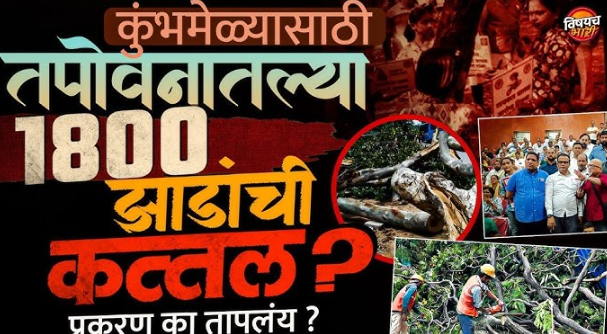
The city of Nashik stands at a pivotal moment. As preparations accelerate for the upcoming Simhastha Kumbh Mela 2027, one issue has overshadowed every aspect of development Tapovan Tree Cutting. With more than 1,700 trees marked for removal to create infrastructure for the massive religious event, the debate has ignited strong emotions across the city. Tapovan Tree Cutting From environmental activists and students to political groups and local residents, voices of concern are rising in unison, asking a simple but powerful question:
“Can a ‘Green Kumbh’ truly be green if it begins by cutting thousands of trees?”
This blog aims to explore this question in depth. Through verified information, ecological analysis, public opinion, and insights into government plans, we will examine whether the Tapovan Tree Cutting decision is justified or if Nashik is sacrificing its precious green heritage in the name of development. #TapovanTreeCutting
SECTION 1: THE BACKDROP — WHAT IS HAPPENING IN TAPOVAN?
Tapovan is not just a geographical location; it is a sacred and ecological landmark in Nashik. Surrounded by lush green cover, the area holds deep spiritual significance. Historically, Tapovan Tree Cutting has been associated with the Ramayana era, making it both a natural and cultural asset.
However, in late 2024 and early 2025, Nashik Municipal Corporation (NMC) announced a major development plan: # TapovanTreeCutting
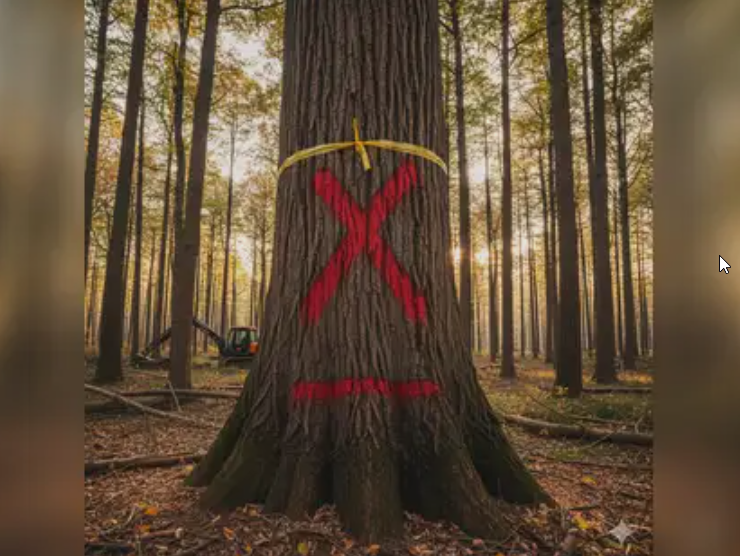
👉 1,700+ trees would be cut
to construct roads, temporary shelters, Sadhugram facilities, sewage infrastructure, and other arrangements for the Simhastha Kumbh Mela.
The official justification?
“We need wider roads and more space to manage the massive influx of pilgrims.”
At first glance, the logic seems practical. The Kumbh Mela attracts millions, creating logistical challenges. However, the scale of proposed Tapovan Tree Cutting has triggered immense public backlash.
SECTION 2: THE SCALE OF ENVIRONMENTAL IMPACT
To understand the seriousness of the Tapovan Tree Cutting issue, we must look at what cutting 1,700+ mature trees truly means.
1. Loss of Mature Green Cover
Each mature tree contributes to:
- Cooling the local environment
- Carbon absorption
- Biodiversity support
- Oxygen production
- Noise reduction
- Water retention in soil
Cutting such trees cannot be compensated simply by planting saplings.
2. Why Mature Trees Matter More
A 20–30-year-old tree provides 70–80 times more ecological benefits than a newly planted sapling.
Even if officials plant 15,000 new saplings, survival rates are usually below 40% in urban areas.Tapovan Tree Cutting
3. Micro-Climate Alteration
Tapovan’s natural green belt plays a major role in:
- Maintaining Nashik’s clean air
- Reducing heat during summers
- Supporting local wildlife, especially birds and insects
Removing these trees disrupts all of the above.
Thus, Tapovan Tree Cutting is not just the removal of wood; it is a long-term blow to Nashik’s environmental health.
SECTION 3: WHAT THE GOVERNMENT SAYS — THE DEVELOPMENT ARGUMENT
The Nashik Municipal Corporation insists that the project is necessary.
Key official arguments include:
- The city must prepare for millions of visitors during Kumbh.
- Old trees will be transplanted under expert guidance where possible.
- The government will plant 15,000 saplings across Nashik.
- Roads need widening to avoid stampedes and traffic jams.
- The temporary “Sadhugram” requires open space.
While these statements are reassuring on paper, the public remains concerned because:
- Tree transplantation rarely succeeds—success rates in India are between 15% and 25%.
- 1400+ trees will not be transplanted, but cut completely.
- Nashik has already been losing green cover rapidly due to urban expansion.
Thus, the question remains:
Is the development truly unavoidable, or are more eco-friendly alternatives being ignored?
SECTION 4: PUBLIC REACTION — NASHIK RISES TO PROTECT TAPOVAN
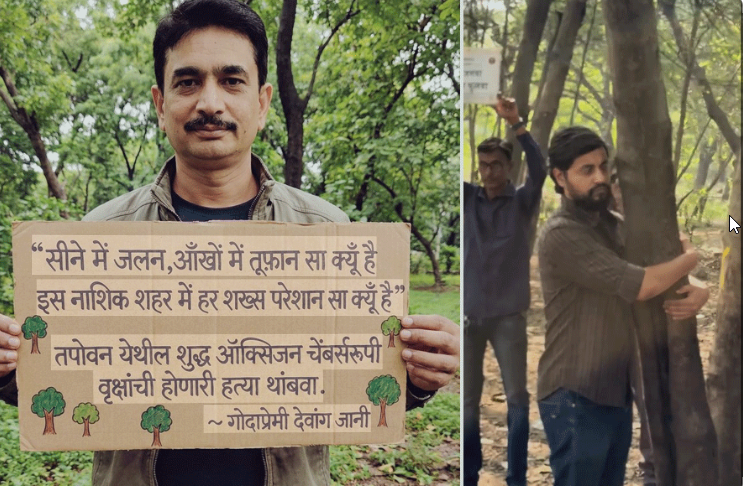
One of the most striking aspects of this controversy is the unity shown by Nashik’s citizens.
Massive Protests
Residents from all walks of life have come together:
- Students
- Environmental activists
- Teachers
- Local NGOs
- Domestic workers
- Senior citizens
- Religious groups
What’s unique is that the protest is not political it is purely environmental.
Viral Social Media Movement
Hashtags like:
- #SaveTapovan
- #StopTreeCutting
- #GreenNashik
have trended locally.
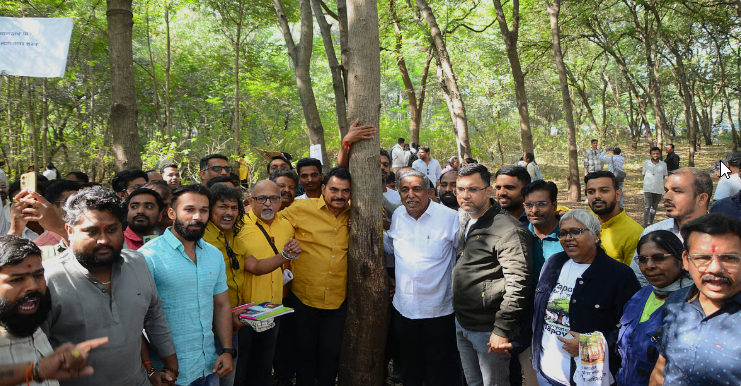
Videos of citizens tying sacred threads around trees, hugging trees, and forming human chains spread widely.
Emotional Connection
For many Nashikites, Tapovan trees are:
- Part of their childhood
- Part of their city’s identity
- A symbol of spirituality and purity
The idea of Tapovan Tree Cutting feels like an emotional loss, not just environmental damage.
SECTION 5: ECOLOGICAL ALTERNATIVES — WHAT COULD BE DONE INSTEAD?
Experts suggest that the government could adopt less destructive approaches, such as:
1. Building Vertical Facilities Instead of Horizontal Expansion
Reducing land requirements preserves trees.
2. Using Nearby Open Spaces for Sadhugram
There are several relatively barren areas that could host temporary structures.
3. Creating Elevated Walkways for Movement
Several Kumbh cities have used this solution.
4. Designing Temporary, Eco-Friendly Camps
Using modular structures instead of permanent construction.
5. Integrating Trees Into the Design
Rather than removing trees, construction can be redesigned around them.
However, these options require time, cost, and commitment which raises the concern that the government is choosing the “easier but destructive” path.
SECTION 6: THE ‘GREEN KUMBH’ QUESTION — IS IT REAL OR JUST A LABEL?
The government promises a “Green Kumbh” with:
- Solar energy
- Waste recycling
- Sustainable water use
But the irony is unavoidable:
A Green Kumbh cannot begin by destroying greenery.
This contradiction has become the core of public debate.
Questions people are asking:
- Why call it a “Green Kumbh” if the foundation is environmental loss?
- Can plantation offset the removal of 1,700+ mature trees?
- Should religious events cause ecological damage?
- Is there transparency in the decision-making process? Tapovan Tree Cutting
The Tapovan Tree Cutting issue highlights a deeper philosophical challenge:
Are we prioritizing short-term convenience over long-term ecological survival?
SECTION 7: LEGAL & ETHICAL DIMENSIONS
Environmental clearances must follow rules under:
- The Forest Conservation Act
- Urban Tree Protection Guidelines
- Local municipal environmental policies
Citizens argue that:
- There was insufficient public consultation
- Ecological assessments were not made public
- Tree-removal lists lacked proper transparency
Legal petitions are expected if cutting proceeds without revised plans.
SECTION 8: EXPERT OPINION — WHY TREES ARE IRREPLACEABLE
Botanists and environmental scientists highlight several crucial facts:
1. Transplantation is Not a Long-Term Solution
Most mature trees do not survive relocation due to root damage.
2. Newly Planted Saplings Take 20–30 Years to Match Benefits
Meaning, Nashik will experience two decades of reduced environmental quality.
3. Losing Green Cover Increases Urban Heat Islands
Tapovan Tree Cutting in Nashik already feels hotter every year this will worsen.
4. Tapovan is a Biodiversity Zone
Cutting trees destroys:
- Bird habitats
- Insect ecosystems
- Soil fertility
- Natural water retention cycles
Thus, the ecological cost is far greater than the development benefit.
SECTION 9: THE CULTURAL PERSPECTIVE — TAPOVAN IS A HERITAGE
Tapovan is mentioned in ancient texts as a region where:
- Lord Rama
- Lakshmana
- Sita
lived during their exile.
This makes it a living heritage site, not just a plot of land.
Cutting trees here hurts both faith and history.
Many Nashik citizens argue:
“A sacred event like Kumbh should not damage a sacred environment.”
CONCLUSION — THE REAL QUESTION WE MUST ASK
After exploring both sides, one thing is clear:
Tapovan Tree Cutting is not merely a developmental decision—
it is a moral, ecological, and cultural choice.**
The real question before Nashik is:
Should a temporary religious event justify permanent environmental loss?
Can a Green Kumbh truly be “green” if it destroys the very greenery it stands upon?
Development is important.
Kumbh preparations are essential.
But sustainable development is the only path that ensures that Nashik grows without sacrificing its soul.
The hope is that authorities listen, rethink, redesign, and choose a path where heritage, nature, and development coexist harmoniously.




Pingback: Nashik Marathon 2025: 5 Powerful Benefits & Major Challenges